
Dave’s-Style Mac and Cheese: A Home Recipe
A simple stovetop version with a butter-and-flour sauce. These home ingredients do not establish the restaurant’s cheese blend.
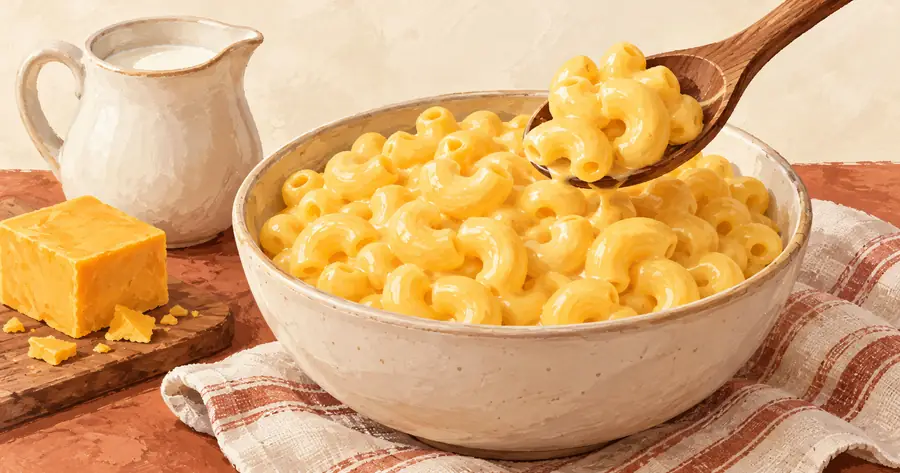
For creamy stovetop mac and cheese, the moment you add the cheese matters. Thicken the milk first, then take the pan off the heat before stirring in the cheese. Keeping those steps separate gives you more control than boiling everything together.
Cook elbow macaroni separately. Make a butter-and-flour base, whisk in milk and thicken it gently. Remove from the heat, melt in cheddar and fold in the pasta. This is a suggested home adaptation that this site has not kitchen-tested, not Dave’s official recipe.
What this recipe can and cannot tell you
The method follows the general sauce technique in Cabot’s published stovetop mac and cheese recipe. The smaller batch and quantities below are a separate home version. Cabot’s testing and nutrition information do not apply automatically to it.
The restaurant menu confirms that Dave’s sells Mac & Cheese. It does not reveal a complete cheese formula through the item name alone. Do not use this recipe to claim that Dave’s uses a particular cheddar, American cheese or milk product.
Our restaurant Mac and Cheese guide covers the purchased serving. This page focuses on making a home side.
Ingredients for four to six side servings
- 8 ounces dry elbow macaroni
- 2 tablespoons unsalted butter
- 2 tablespoons all-purpose flour
- 2 cups milk
- 8 ounces mild or medium cheddar, grated
- ½ teaspoon Dijon mustard, optional
- ¼ teaspoon garlic powder, optional
- A small pinch of ground black pepper
- Salt to taste after the cheese is added
Keep a little extra milk available for adjusting the finished consistency. The quantity needed can change with the pasta shape and cheese you choose.
Grate a block of cheese or use a shredded cheese intended for melting. Cheese products differ, so follow any preparation instructions on the package. Do not assume that every pre-shredded product behaves identically.
These ingredients include milk and wheat. Mustard is optional but still needs to be checked for anyone who avoids it. Substituting gluten-free pasta or another milk changes the recipe and may change the texture.
Cook the pasta and build the sauce
- Cook the macaroni. Follow the pasta package’s directions in a separate pot. Drain when it reaches the texture you like. Do not leave it sitting in cooking water while making the sauce.
- Make the base. Melt butter in a saucepan over medium-low heat. Stir in the flour until it forms a smooth paste. Cook briefly while stirring, without letting it turn dark.
- Add the milk gradually. Whisk in a small splash first to loosen the paste. Add the rest in stages and scrape the corners of the pan so no flour mixture is left behind.
- Thicken gently. Stir over moderate heat until the sauce lightly coats a spoon. Add the optional mustard, garlic powder and pepper.
- Remove from the heat. Stir the cheese in a handful at a time until it melts. Do not return the pan to a hard boil after adding it.
- Combine and adjust. Fold in the hot drained pasta. Add a small splash of milk if the sauce is thicker than you want. Taste before adding salt.
Allow around half an hour as a planning estimate, including preparation. The actual time depends on your pasta and stove. Serve once the sauce coats the macaroni rather than cooking it longer just to match a clock.
Why the sauce changes as it stands
A sauce that looks fairly loose in the pan can become thicker after it is mixed with pasta and left to stand. Keep that in mind if the meal has to wait while chicken finishes cooking.
Add extra milk in small splashes and stir before deciding on another. Pouring in a large amount at once can turn a thick sauce into one that no longer coats the pasta.
If the sauce looks oily or grainy, strong heat may have affected the cheese mixture. Remove the pan from the burner and stir gently. More boiling is unlikely to restore the texture you wanted. For the next batch, melt the cheese off the heat and add it gradually.
The home fried-tender recipe has a separate cooking schedule. Finish that chicken safely before assembling the meal rather than leaving mac on the burner indefinitely.
Plain mac, spicy mac and a loaded dish are different
You can serve this mac plain. If you want a spicy variation, try a few drops of Buffalo sauce in one serving first. The salt, heat and acidity of a bottled sauce can change the whole bowl quickly.
Adding cooked chicken and fries makes a larger dish. It does not reproduce the restaurant’s portion sizes or nutrition. Use the Spicy Buffalo Mac guide and Top-Loaded Fries guide when you are comparing the actual products.
Dave’s official nutrition and allergen hub concerns its own listed servings. A restaurant calorie figure cannot be assigned to this homemade batch just because both dishes use macaroni and cheese.
Store and reheat a portion gently
Use USDA leftover guidance: refrigerate promptly at 40°F or below. Use within three to four days, with earlier ingredient limits taking priority. Refrigerate within two hours, or one hour above 90°F. Reheat leftovers to 165°F.
Divide a large batch into shallow containers. Reheat only the portion needed and stir as it warms so the temperature and texture are more even. A splash of milk can loosen the sauce, but it does not replace the safe reheating check.
For restaurant choices, see the Dave’s Hot Chicken menu. For this home bowl, aim for a sauce that coats the pasta and serve it while the texture suits you. You can adjust your own cheese and milk amounts without presenting that choice as Dave’s secret formula.


