
Dave’s-Style Kale Slaw: A Simple Home Recipe
Thinly cut greens and a measured amount of dressing make this a practical side or sandwich topping. The restaurant’s exact formula is not known.
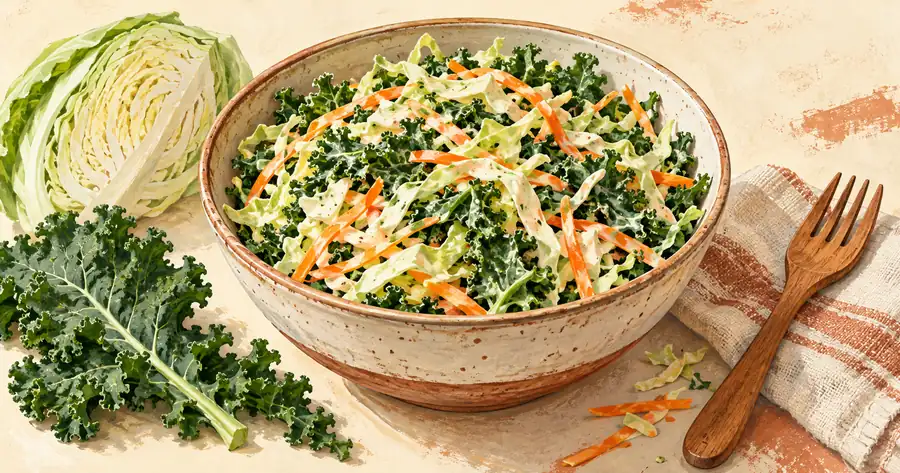
Kale slaw can be hard to eat in a sandwich when the leaves are cut too wide or the stems are left in. Start with thin ribbons and dry greens. Those two choices matter before you decide how much dressing to add.
Combine thinly sliced kale and cabbage with grated carrot. Toss with a simple mayonnaise dressing and chill before serving. This is a suggested home adaptation that this site has not kitchen-tested. It does not reproduce a verified Dave’s recipe or its nutrition figures.
Ingredients for four to six side portions
Measure the vegetables after trimming and cutting them. Do not pack the cups tightly. The yield is approximate because leaf size and slicing affect the finished volume.
- 2 cups finely sliced kale with tough stems removed
- 2 cups finely shredded green cabbage
- ½ cup grated carrot
- ⅓ cup store-bought mayonnaise
- 1 tablespoon lemon juice
- 2 teaspoons sugar
- ⅛ teaspoon fine salt to start
- A small pinch of ground black pepper
The dressing follows the common mayonnaise, citrus and sugar approach in Hellmann’s classic coleslaw recipe. The kale, quantities and vegetable balance here are a separate home variation. Do not apply the source recipe’s nutrition panel to this batch.
If your mayonnaise or vegetables already have added seasoning, taste before adding the salt. A bagged mix is convenient, but check what it contains and whether it includes dressing that would change the amounts above.
Wash and dry the greens before cutting
University of Minnesota Extension recommends washing produce under cool running water. Do not use soap or bleach on the vegetables. Produce labeled washed, triple washed or ready-to-eat does not need another wash.
Remove damaged outer cabbage leaves and tough kale stems. Dry washed greens with a salad spinner or clean disposable towel. Water left on the leaves can thin the dressing and collect at the bottom of the bowl.
Use a clean board and utensils. Make the slaw before preparing raw chicken, or thoroughly clean the work area before switching tasks. Keep the finished vegetables away from raw poultry juices.
Cut for the way you plan to serve it
For a sandwich topping, roll several kale leaves together and slice them into narrow ribbons. Cut across any especially long ribbons so they are easier to bite through. Shred the cabbage to a similar size.
A side bowl can handle slightly longer pieces. A slider benefits from a finer cut because a large leaf can pull the filling out when you take a bite. Our regular slider guide explains how the restaurant uses slaw as one part of a larger build.
If the kale is particularly firm, gently squeeze the clean cut leaves with your hands before adding dressing. Stop when the texture softens to your liking. Do not mash the cabbage into the same texture; some crunch is useful.
Mix the dressing, then add it gradually
- Whisk mayonnaise, lemon juice, sugar, salt and pepper in a small bowl.
- Combine the prepared kale, cabbage and carrot in a larger bowl.
- Add about three-quarters of the dressing and toss well.
- Cover and chill for about 20 minutes as a serving preference.
- Toss again and taste. Add the remaining dressing only if needed.
The chilling time is a suggested texture step, not a food-safety treatment. It does not make contaminated vegetables safe. Keep the slaw refrigerated during that rest.
Resist adding all the dressing to make the bowl look instantly creamy. The vegetables can release moisture after mixing. You can add more later, but removing excess dressing from fine-cut greens is difficult.
Adjust texture before adding more seasoning
| What you notice | Useful adjustment |
|---|---|
| Too much liquid | Drain the serving portion and use drier vegetables next time |
| Leaves are difficult to bite through | Remove remaining stems and cut more finely |
| Dressing is too sharp | Try a little more mayonnaise before increasing sugar |
| Slaw feels too heavy | Add more prepared vegetables rather than water |
Make changes in a small serving first. If it works, scale that change to the rest. This is especially helpful when adjusting sweetness because the chicken, pickles and dipping sauce will also affect the final bite.
Do not add the homemade orange dipping sauce and assume it behaves like the plain slaw dressing. It has different ingredients and may make the side sweeter or more strongly seasoned.
Keep serving and storage simple
Refrigerate at 40°F or below. USDA’s general leftover guidance gives three to four days refrigerated, with earlier ingredient deadlines taking priority. Refrigerate within two hours, or one hour above 90°F. That window does not guarantee the same crisp texture throughout.
For a picnic, keep the slaw cold in a cooler and put out small portions. Do not leave the whole batch beside a warm tray of chicken. Discard any slaw contaminated by raw poultry.
Ordinary mayonnaise can contain egg. Check the exact dressing ingredients before serving someone with a dietary restriction. The restaurant Kale Slaw guide covers the purchased side separately.
Serve this home version beside air-fryer chicken or add a small amount to a bun just before eating. The Dave’s Hot Chicken menu is the place for restaurant choices. For the homemade bowl, focus on fine cuts, dry leaves and enough dressing to coat rather than flood the vegetables.


