
Homemade Dave’s-Style Dipping Sauce Recipe
A small-batch creamy dip inspired by hot-chicken meals. The ingredients below describe this home version, not the restaurant’s recipe.
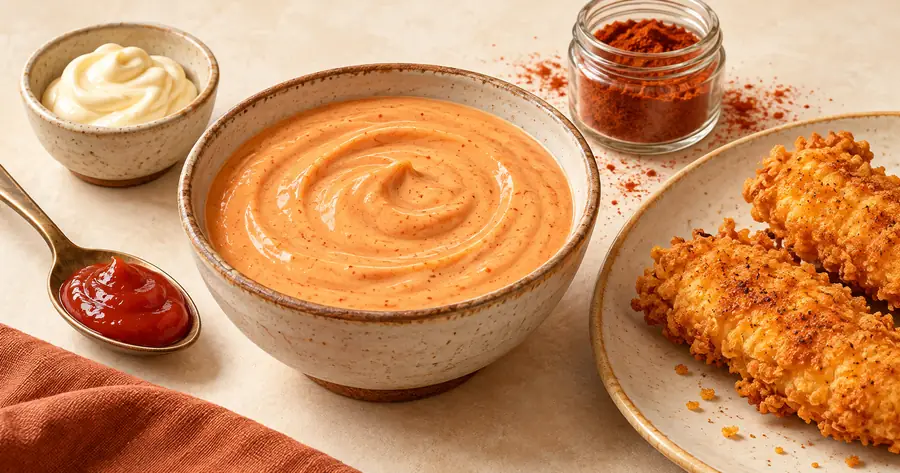
A homemade chicken dip is easier to adjust when you separate creaminess, tang and heat. Start with mayonnaise, then add the stronger ingredients in small amounts. That gives you control without relying on a claim that someone has uncovered Dave’s secret formula.
Stir together mayonnaise, ketchup, a little mustard, vinegar and dry seasonings. Taste with the food you plan to dip, then adjust one ingredient at a time. This is a suggested home-style formula that has not been kitchen-tested by this site. It is not Dave’s official sauce recipe.
Ingredients for a small bowl
The following amounts make roughly two-thirds of a cup. The final yield changes slightly with your adjustments. Use a clean bowl, measuring spoons and store-bought mayonnaise.
- ½ cup mayonnaise
- 2 tablespoons ketchup
- 1 teaspoon yellow mustard
- 1 teaspoon apple cider vinegar
- 1 teaspoon honey or sugar, optional
- ½ teaspoon garlic powder
- ½ teaspoon sweet paprika
- A small pinch of ground black pepper
- A few drops of hot sauce, optional
Leave added salt until the end. Mayonnaise, ketchup and mustard already bring seasoning. Sweet paprika gives a different result from hot paprika. Read the label rather than assuming every red spice has the same heat.
The optional honey is a home flavor choice. Its inclusion here does not establish that Dave’s Sauce contains honey. For verified restaurant information, use our Dave’s Sauce menu guide.
Mix, taste and make one small change
- Stir the mayonnaise and ketchup until the color is even.
- Add the mustard, vinegar, garlic powder, paprika and pepper.
- Taste a little sauce with a cooked tender or fry.
- Add the optional sweetener or a few drops of hot sauce if wanted.
- Cover and refrigerate until serving. Stir again before using.
A spoonful of sauce by itself can seem stronger than the same amount on a sandwich. Testing with food helps you judge the whole bite. Use a separate clean spoon each time rather than returning a used dipping piece to the mixing bowl.
Keep a note of any changes if you want to repeat your version. “Another squeeze” is hard to reproduce later. A quarter-teaspoon adjustment is easier to remember and reverse.
What each ingredient does
| Ingredient | Main role in this version |
|---|---|
| Mayonnaise | The creamy base |
| Ketchup | Tomato flavor, sweetness and color |
| Mustard and vinegar | A sharper tang |
| Paprika and garlic powder | Seasoning without extra liquid |
| Hot sauce | An optional change in heat and tang |
Using mayonnaise as the base for a dip is a common method. Hellmann’s published special-sauce recipes show other mayonnaise-based combinations. Those recipes do not verify Dave’s ingredients or turn this particular mixture into a restaurant copy.
If you want a brush-on chile finish for cooked chicken, use the spicy-oil guide. This creamy dip serves a different purpose and should not replace the oil finish measure for measure.
How to fix a mix that is out of balance
Too sharp: Try another spoonful of mayonnaise before adding lots of sugar. The extra base reduces the strength of the vinegar and mustard in each spoonful.
Too sweet: Add a few drops of vinegar and taste with food again. More hot sauce can add heat but may also add salt or acidity, so check its label.
Too thin: Stir in a little more mayonnaise. Stop adding brine or vinegar until you have tested the texture. A watery dip can make a sandwich bun soggy quickly.
Too hot: Set aside some plain base before adding more chile. Once a whole bowl is heavily seasoned, balancing it may require a much larger quantity of sauce than you meant to make.
Keep the home dip separate from restaurant allergen claims
The ingredients in your jar decide what is in the homemade batch. Regular mayonnaise commonly contains egg. Other products can introduce additional ingredients or allergens. Check the labels on the exact mayonnaise, mustard, ketchup and seasonings you use.
Use commercial mayonnaise for this simple no-cook version. The FDA’s egg-safety guidance notes that commercial mayonnaise uses pasteurized eggs. That does not mean a mixed sauce can be left warm or handled without care.
For the purchased restaurant sauces, our egg and milk allergen guide addresses a different question. A homemade substitution is not evidence that the restaurant version meets the same dietary needs.
Serve a little and keep the rest cold
Put a small amount in individual dipping bowls. Keep the clean main batch refrigerated at 40°F or below. USDA’s general leftover guidance gives a three-to-four-day refrigerated window and a two-hour room-temperature limit, reduced to one hour above 90°F. Follow any earlier ingredient deadline.
Do not mix used table dip back into the clean batch. Discard sauce contaminated by raw chicken or dirty utensils. The added vinegar is for flavor, not a validated preservation method.
Try the dip beside oven-baked tenders or fries before spreading it on a whole sandwich. For restaurant food choices, use the Dave’s Hot Chicken menu. The best home version is the one you can adjust clearly and repeat, without a promise that it duplicates the restaurant.


