
Dave’s-Style Hot Chicken: A Homemade Tender Recipe
A home adaptation with a crisp flour coating and a separate spicy finish. Cooking time is an estimate; internal temperature decides doneness.
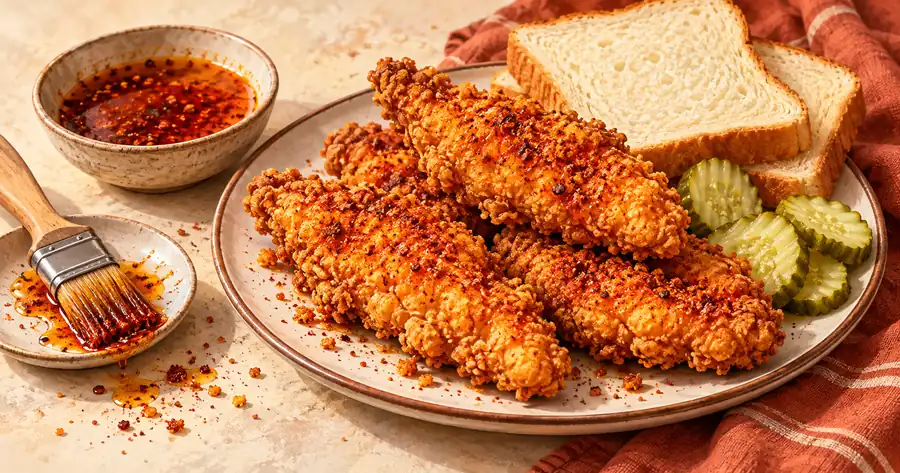
A homemade hot-chicken meal works best when you treat the coating and the spicy finish as separate steps. Fry the chicken until it is safely cooked. Then brush on only the amount of seasoning you want. That gives different people at the table more control over their portions.
Use thawed chicken tenderloins, a buttermilk marinade and a light flour coating. Fry in small batches at about 350°F. Begin checking smaller pieces after roughly four minutes and continue until every piece reaches 165°F inside. Apply the spicy finish after cooking.
A home method rather than a secret formula
Buttermilk, seasoned flour and a finishing oil are familiar elements of Nashville-style chicken recipes. McCormick’s published Nashville hot chicken method is one example. Its chicken portions and commercial seasoning are different from the suggested tender version below.
This site has not kitchen-tested this adaptation. It is not Dave’s private recipe and does not promise a match for a named restaurant heat level. The seasoning guide explains how to begin with a modest home blend.
If working with a pot of hot oil does not suit your kitchen, use the oven-baked method or air-fryer method. Their coatings and cooking times are different.
Ingredients for about three main portions
The number of portions depends on tender size and sides. Start with pieces of similar thickness so the batch cooks more evenly.
- 1 pound thawed raw chicken tenderloins
- 1 cup buttermilk
- 1 tablespoon hot pepper sauce
- 1 teaspoon fine salt, divided
- 1 cup all-purpose flour
- ¼ cup cornstarch
- 1 teaspoon paprika
- 1 teaspoon garlic powder
- ½ teaspoon ground black pepper
- Fresh canola oil suitable for frying, enough for your fryer or cooking vessel
For the first finishing portion, mix 2 tablespoons fresh neutral oil with 1 teaspoon of the dry blend in our seasoning guide. Make another small portion if needed rather than coating the whole meal heavily at once. Keep plain bread and pickle slices for serving.
The canola oil above is a choice for this home recipe. It is not a statement about the oil Dave’s restaurants use. Our restaurant frying-oil guide explains what remains unverified.
Prepare the kitchen before heating oil
Use a fryer according to its manual or a deep, heavy cooking vessel with ample headroom. Have a deep-fry thermometer for the oil and a food thermometer for the chicken. Use heat-safe utensils and a stable surface.
The USDA deep-frying safety guide warns against water entering hot oil and against leaving a fryer unattended. Keep the oil well below the rim so it has room to rise when food is added. Follow the appliance’s fill limit.
Keep children, pets and loose items away from the cooking area. Never pour water onto an oil fire or carry a burning pan. If a fire starts, turn off the heat only if safe, get clear and call emergency services. Do not move a pot of hot oil to the sink.
Marinate and coat the tenderloins
- Mix buttermilk, hot sauce and ½ teaspoon salt in a bowl. Add chicken, cover and refrigerate for one hour.
- In a shallow dish, combine flour, cornstarch, paprika, garlic powder, pepper and the remaining salt.
- Lift each piece from the marinade and let excess drip off. Press lightly into the flour mixture on both sides.
- Shake off loose flour and set the coated pieces on a tray reserved for raw chicken. Keep them refrigerated while preparing the fryer.
Discard the used marinade and leftover coating after preparing the chicken. Do not rinse raw chicken or taste its coating. Prepare cold sides on a separate clean board before handling poultry.
Fry in small batches and check the center
Heat the oil to about 350°F. Add a few coated tenderloins carefully without crowding. Keep the oil temperature under control and allow space around the food.
Cooking may take roughly four to eight minutes depending on thickness, batch size and temperature. That is a planning range for this untested adaptation. Browning or floating does not establish doneness.
Remove a piece from the oil before checking it with a clean food thermometer. Measure the thickest center. Chicken needs to reach 165°F. Return any undercooked piece for more cooking, then check again. Use a clean plate for safely cooked pieces.
Let the oil return toward the cooking temperature between batches. Do not speed the next batch by turning the burner to maximum and walking away. A thermometer gives better information than guessing from the bubbles.
Finish a cooked piece before seasoning everything
Stir the separate finishing mixture and brush a small amount onto one cooked tender. Taste that piece before adding more blend or applying a thicker layer.
Use fresh measured oil for this small home finish. You do not need to scoop oil from the frying pot. Keep the finishing brush separate from raw-food utensils.
Serve with home-style kale slaw and a creamy dipping sauce. Keep some chicken lightly seasoned if people prefer different heat levels.
Cool leftovers and let the oil cool separately
Follow USDA leftover guidance: refrigerate food at 40°F or below within two hours, or one hour above 90°F. Use refrigerated cooked chicken within three to four days and reheat to 165°F.
Turn off the cooking heat and allow the frying oil to cool fully before handling it. Keep it away from the refrigerator food-preparation area while it is hot. Do not pour used oil down a drain.
The Dave’s Hot Chicken menu covers restaurant products. For this home meal, measure the heat separately and use the thermometer as your finish line. A dark crust alone cannot tell you that the center is ready.


