
Nashville Hot Chicken Seasoning and Spicy Oil Guide
Dry seasoning and a brush-on oil finish do different jobs. Start with a modest blend and apply it to fully cooked food.
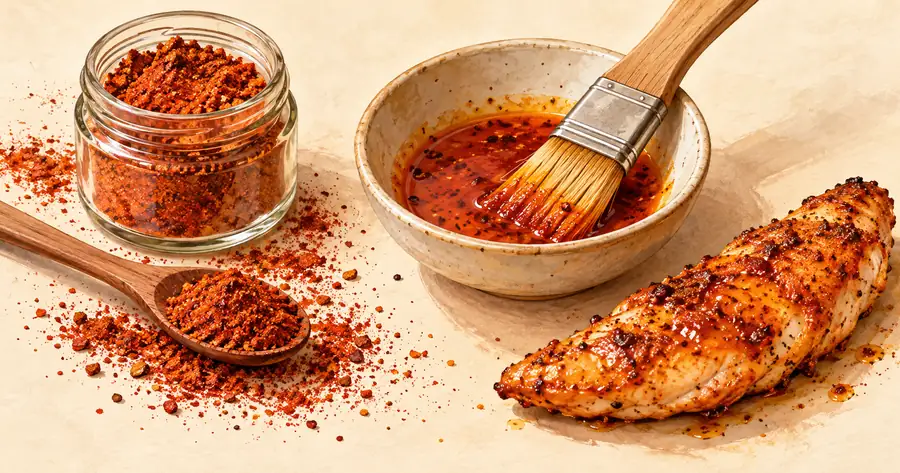
A spoonful of dry seasoning and a spoonful of spicy oil can contain very different amounts of chile. The dry mix supplies the spices. The oil spreads them over the food. Understanding that difference helps you control the finish instead of adding both until the chicken is far hotter than planned.
A dry blend can season a coating or be sprinkled lightly on cooked food. A finishing oil suspends the blend in fat so it can be brushed on after cooking. Neither a homemade blend nor a store-bought Nashville seasoning automatically matches Dave’s seven heat levels.
What goes into a Nashville-style blend?
Common building blocks include red pepper, paprika, garlic, salt and a little sweetness. For one commercial example, the Lawry’s Nashville Hot product page lists spices, brown sugar and garlic among its ingredients. Its suggested uses include mixing the seasoning with oil or butter.
That example establishes how one manufacturer builds and uses a product. It does not reveal Dave’s proprietary seasoning or prove that all blends have the same proportions.
Check whether a purchased blend already contains salt and sugar before adding it to seasoned flour or a prepared sauce. Otherwise, an extra spoonful intended to add heat may also make the food much saltier.
A small home blend to start with
This suggested formula makes about five tablespoons. It has not been kitchen-tested by this site and is not a verified restaurant copy. Use it as a modest starting mixture rather than a fixed heat promise.
- 3 tablespoons sweet paprika
- 1 teaspoon cayenne pepper
- 1 teaspoon garlic powder
- 1 teaspoon onion powder
- 2 teaspoons light brown sugar
- ½ teaspoon fine salt
- ½ teaspoon ground black pepper
Break up lumps of sugar and whisk everything together. Use dry utensils. Sweet paprika provides the base in this version. Hot paprika or a strong chili blend will change the heat even if the measured quantity stays the same.
For less heat, leave out some or all of the cayenne in your first batch. For a stronger version, test a little extra in a small portion before changing the whole jar. Do not taste a spoonful of dry chile powder directly.
Turn only a small portion into finishing oil
Begin with 2 tablespoons fresh neutral cooking oil and 1 teaspoon of the dry blend. Whisk them in a small clean bowl. This is a suggested starting ratio, not a thick restaurant-style paste.
- Measure the oil and dry blend separately.
- Stir until the spices are distributed.
- Brush a small amount onto one fully cooked piece of chicken.
- Taste that piece before adding more blend or coating more heavily.
- Stir the oil again before the next brushful because particles can settle.
You do not need smoking-hot oil to make this home mixture. Use it at room temperature or gently warm the measured oil in a small pan, then remove the pan from the heat before stirring in the spices. Do not add water or wet utensils to hot oil.
Spice suppliers also use an after-cooking finish. Nashville Joe’s baked chicken recipe describes brushing a seasoned fat mixture onto the finished chicken. The much stronger quantities in that branded recipe should not be transferred blindly to a different blend.
Why a finish can taste scorched or feel gritty
Spices and sugar can scorch when left over strong direct heat. A darker color is not proof that a finishing mixture tastes better. If the mixture smells burned, make a fresh small portion rather than trying to hide it with more sugar.
A blend containing ground spices will not dissolve into a completely clear oil. Some visible particles are expected. Whisking before each use helps spread them more evenly instead of leaving most of the seasoning in the last spoonful.
If the finish feels too thick, add a little more oil to a small portion and test it on cooked food. If the food simply tastes too hot, applying less of the mixture may be more useful than making a large oily serving.
Use the right form at the right stage
| Form | Practical use | Main thing to check |
|---|---|---|
| Dry blend | Season flour or lightly dust cooked food | Existing salt and sugar in the food |
| Finishing oil | Brush onto fully cooked chicken | How much oil and seasoning each piece receives |
| Creamy dip | Serve on the side or spread on a bun | Its separate ingredients and storage needs |
The oven-baked tender recipe and air-fryer recipe include their own finishing quantities. You do not need to add this entire batch on top of those amounts.
Our creamy dipping sauce is another serving choice. It is not interchangeable with seasoned oil in the same measurement.
Store the dry mixture without turning it into an oil project
Keep the unused dry blend in a clean airtight container away from heat, light and moisture. University of Minnesota Extension gives similar storage principles for dried foods. Label your jar with the ingredients and mixing date so you can repeat or adjust it.
Mix only the amount of finishing oil needed for the meal. This guide does not provide a validated shelf life for homemade seasoned oil. Do not put a brush used on food back into the dry jar, and do not add fresh garlic or herbs to this storage method.
Keep raw-chicken utensils separate from the serving brush. A spicy finish does not cook poultry or replace the doneness check in the recipe you are using.
Keep restaurant heat names separate
More cayenne does not let this site assign a reliable Dave’s Mild, Hot or Reaper equivalent. Pepper strength, serving size and the amount applied all matter. A numerical Scoville claim would need evidence for the actual mixture.
Use our Dave’s spice-level guide for restaurant choices and the Dave’s Hot Chicken menu for meal formats. At home, record the blend you used and the amount brushed on. Those two measurements are more useful than giving an unverified restaurant name to the result.


