
Nashville Hot Chicken vs Fried Chicken: Key Differences
Nashville hot chicken is a style of fried chicken. Its finishing spices and serving tradition help explain the difference.
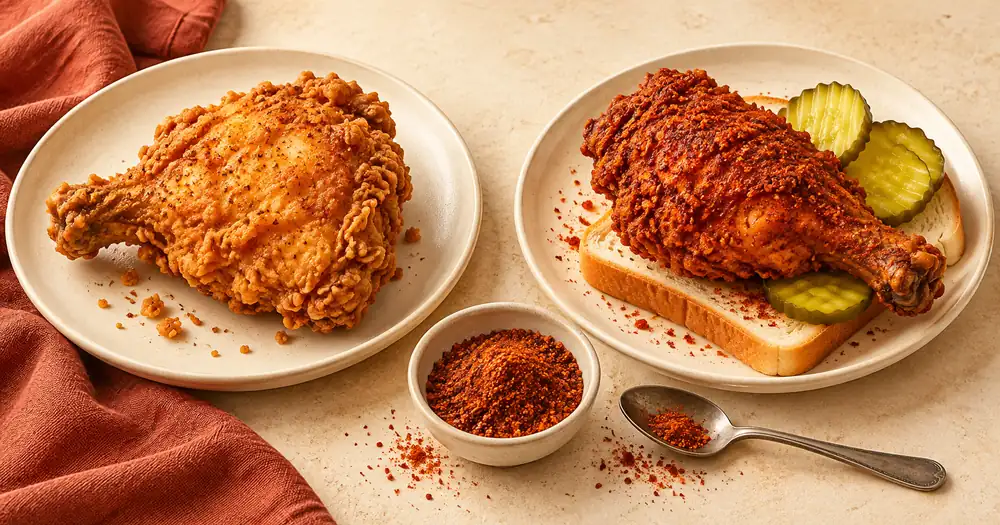
Nashville hot chicken is fried chicken. The difference is the style of seasoning and the way the finished chicken is served. A chile-heavy finish, white bread and pickles are central to the traditional plate. “Regular fried chicken” is a broader description that covers many recipes, including some that are spicy.
Think of Nashville hot chicken as one branch of the fried-chicken family. Its hot seasoning finish is a defining feature. It is not simply a rule that one chicken must be hot and every other kind must be mild.
What makes the Nashville style distinct?
The Music City Hot Chicken Festival describes fried chicken finished with a seasoning mixture that often uses an oil or fat base. It also identifies white bread beneath the chicken and dill pickle slices as parts of the traditional serving.
That finish puts the hot seasoning on the fried surface. The exact blend and method vary by kitchen. A general description of the style should not be used as a claim about a particular restaurant’s secret recipe.
Other fried chicken can get seasoning from a marinade, coating, breading or added sauce. Some versions are mild. Others are very spicy. The word regular does not identify one fixed recipe or a universal level of heat.
The differences at a glance
| Detail | Nashville hot chicken | Other fried chicken |
|---|---|---|
| Basic food | Fried chicken in a regional hot-chicken style | A broad group of fried-chicken recipes |
| Seasoning | A hot finishing mixture is a key feature | Depends on the recipe and coating |
| Traditional serving | White bread and dill pickles | Varies by restaurant and food tradition |
| Heat | Often offered in several named levels | May be mild or spicy |
| Chicken format | Can include bone-in pieces and newer boneless formats | Can also include bone-in or boneless chicken |
Use this as a guide to the style rather than a checklist that every restaurant must follow in exactly the same way. Modern sandwiches and tender meals can borrow the seasoning approach while changing the traditional plate.
The tradition predates national hot-chicken chains
Prince’s own history connects the dish to Thornton Prince and the family restaurant tradition in Nashville. Its origin story is presented as the family’s account, not as a new product created by a modern chain.
The James Beard Foundation’s profile of Prince’s describes chicken that is fried and then covered with hot spices. That helps explain the importance of the finish, beyond simply calling the dish spicy.
A restaurant can serve Nashville-style chicken outside Tennessee. The style name does not mean your meal was cooked in Nashville. Dave’s, for example, began in Los Angeles. Our Dave’s history guide separates that brand’s origin from the older Nashville tradition.
Why bread and pickles appear on the plate
The bread underneath the chicken catches juices and some of the seasoning mixture. Pickles provide another component alongside the chicken. These details are part of the recognizable serving style rather than proof of a particular recipe.
Remember that the bread can pick up the coating from the chicken above it. It should not be assumed to stay plain after serving. If you want bread separately, ask whether the restaurant can provide that arrangement.
Sandwich versions change the layout. A bun holds the chicken and may also contain slaw, sauce and pickles. That is different from a piece of chicken placed on white bread. Our tender and slider guide explains those two formats on Dave’s menu.
How is it different from Buffalo-style chicken?
Buffalo-style chicken commonly brings a different sauce format into the comparison. The festival’s description distinguishes Nashville’s seasoning finish from a wet Buffalo-style sauce. Do not assume that every orange-coated piece of chicken is the same product.
A menu may offer both styles. Read whether you are choosing the chicken’s seasoning, a sauce coating or a separate dip. A chicken piece with Buffalo sauce on top is a different order from a Nashville-style tender with a dipping cup beside it.
The Saucy Bites guide helps when a menu adds named sauces to smaller pieces. Flavor names need their own reading rather than being folded into one general hot-chicken label.
Heat labels are local descriptions
Mild, Medium and Hot are not shared measurement units. One restaurant’s label cannot be converted reliably into another restaurant’s label without matching evidence. The name Nashville also does not tell you how much heat the selected serving contains.
Ask about the range when you visit a restaurant for the first time. Choose a level you are comfortable eating rather than treating the hottest item as the most authentic order. A meal can be a useful introduction without becoming an extreme-heat challenge.
Our Dave’s heat-level guide explains that restaurant’s own choices. It should not be used as a universal scale for every Nashville-style kitchen.
Compare the complete recipe and serving
Neither style name establishes a calorie total, an ingredient list or a portion weight. Bone-in chicken, tenders and sandwiches can come with different coatings, sauces and sides. Use the current information for the exact dish when those details affect your choice.
For a food allergy, ask about ingredients and preparation. A milder seasoning choice does not answer a milk, wheat or other ingredient question. Our Dave’s allergen guide shows why recipe information and heat selection need separate checks.
Order by the food experience you want
Choose Nashville-style chicken when you want to explore its seasoned finish and serving tradition. Choose another fried-chicken recipe when that coating, sauce or meal format is what you prefer. Browse the Dave’s Hot Chicken menu for one modern interpretation, then read the exact dish and heat setting. The style explains the food; your own preferences should decide the order.


