Dave’s Hot Chicken vs KFC: Boxes, Buckets and Meals
A bucket and a Hot Box can feed different kinds of orders. Work out the chicken, sides and serving plan before comparing their prices.
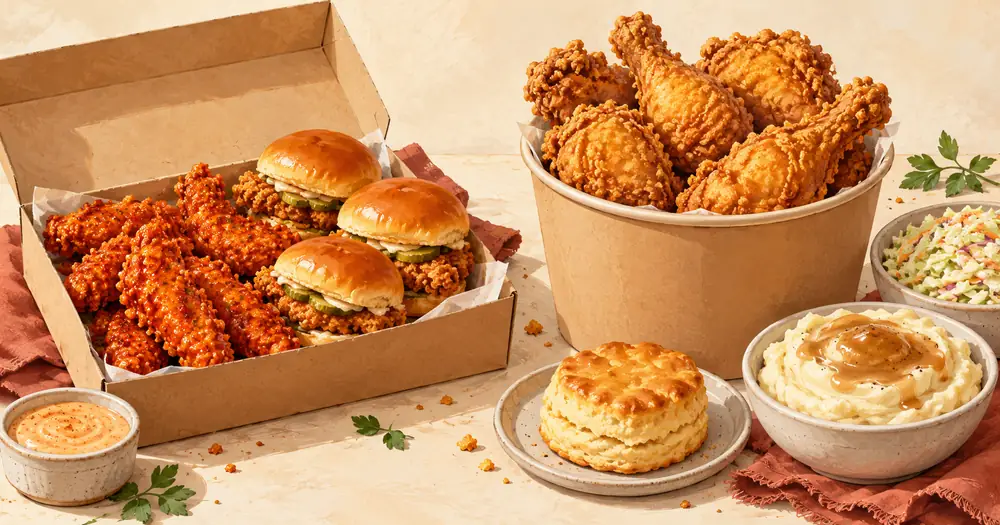
A KFC bucket and a Dave’s Hot Box are easy to compare by their headline price. The harder question is whether they contain the dinner your group wants. Bone-in chicken, boneless tenders and assembled sliders are different servings. Count the people and choose the food format before deciding which package is a better buy.
Inspect KFC’s bucket and family-meal choices when you want bone-in chicken with shared sides and biscuits. Inspect Dave’s Hot Boxes when the group wants tenders or sliders with heat selections. Check the local contents because a chicken box is not automatically a complete meal.
A box, a bucket and a family meal are not equal units
Dave’s Naperville menu lists a Hot Box of ten tenders and a separate Hot Box of ten sliders. Its regular versions allow two heat levels, split across five pieces at each level. The menu also has other group formats, so use the exact product name.
A KFC official location listing describes an eight-piece family option with bone-in chicken, mashed potatoes and gravy, coleslaw and biscuits. That illustrates why the label family meal can cover food beyond the chicken itself. Confirm the current local product and its contents rather than assuming every bucket has that same combination.
Even when two offers have similar piece counts, they are not equal portions. Bones, buns, toppings and the cut of chicken all affect what reaches each plate. A ten-slider order and a ten-tender order are different meals too.
Plan the servings before opening the deal page
Ask each person whether they want a sandwich or separate chicken pieces. Check whether anyone specifically wants bone-in chicken. This small step prevents a large box from being the wrong format for half the table.
Next, decide whether you need a complete dinner or only the chicken. If you already have sides at home, a chicken-focused order may be enough. If you are taking dinner to a place without other food, count the side containers, bread and drinks as part of the order.
| Question | Why it affects the comparison |
|---|---|
| Does everyone want boneless chicken? | A bone-in bucket may not fit the group |
| How many people want a bun? | Sliders include an assembled sandwich format |
| Are sides already provided? | A family bundle may duplicate food |
| Do people want different heat settings? | One shared seasoning choice may not suit everyone |
| Will each person have their own meal? | Individual orders can simplify distribution |
Our Hot Box ordering guide covers Dave’s group formats. Use the product’s actual serving description rather than relying only on a photo or a suggested head count.
KFC also has a boneless comparison
The choice is not limited to KFC bone-in chicken versus Dave’s tenders. KFC’s July 2026 product announcement included Original Recipe Tenders among its meal components. Check its current local tender options if you want a closer boneless comparison.
Match the number of diners and the sides rather than assuming an equal number of strips provides equal weight. A tender-only order also differs from a boxed meal with fries, a drink and other extras.
On the Dave’s side, Bites are a separate format from full tenders. Comparing a large bite count with a small tender count can make the smaller pieces appear like more food without establishing that they are.
Heat choices need a serving plan
Dave’s standard chicken products offer a named heat range, while its Hot Box controls determine how the group order can be split. KFC recipe names and sauce choices are a different system. There is no reliable brand-wide conversion from a KFC item to a specific Dave’s heat level.
If the group includes people who prefer little heat, choose their portions deliberately. Do not assume everyone wants the hottest setting because one diner does. Ask how the selected boxes will be identified at collection.
Use our guide to different heat levels in one order when planning the split. A standard Hot Box and Hot Box Roulette are different products. The latter should not be selected as an ordinary mixed-heat box without reading its contents and warning.
Check what a promotion actually includes today
A dated announcement is evidence of an offer at that time. It does not establish that a discounted box remains available indefinitely. The same applies to a coupon screenshot or a deal mentioned in a video.
Select the restaurant and order method before relying on a promotion. Review the required product, participating-location wording and any app or account condition. If you need delivery, make sure the offer applies to that channel rather than only to pickup.
Then price any missing sides and drinks. An inexpensive chicken offer can still require several additions to become the meal your group planned. Our Dave’s deal-checking guide explains how to separate a current offer from an old advertisement.
Use a complete-order cost per diner
Add the food, required extras and applicable checkout charges. Divide that final amount by the number of people the order is intended to serve. This gives you a planning figure for your actual dinner rather than an unsupported claim about a national price per piece.
Keep the comparison fair. If one cart includes drinks, include the drinks people want in the other. If your household will supply them, do not add them just to imitate a bundle. What matters is the food and drink the group will use.
The Hot Box versus individual-meal comparison can help when a few diners want different sides or sandwich formats. Buying separate meals may be easier to distribute even when one large box looks simpler at first.
Choose the package that matches the table
For bone-in chicken with a biscuit-and-side dinner, start with the relevant KFC family meal. For tenders or sliders with planned heat choices, start with the Dave’s Hot Chicken menu and its Hot Boxes. Check the local contents and build the whole order before paying. The useful winner is the package that gives each diner the meal you intended to provide.


