Dave’s Hot Chicken vs Howlin’ Ray’s: What Changes?
Both offer hot chicken, but their sandwiches and serving formats differ. Use the menu details instead of an unsupported hottest-chicken ranking.
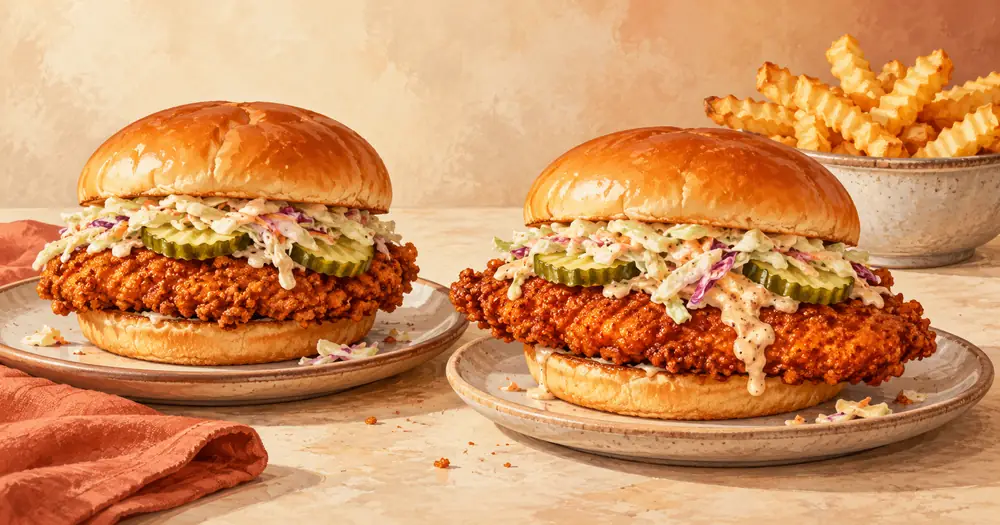
The Sando at Howlin’ Ray’s and a regular Dave’s slider both include chicken, slaw and pickles. The chicken inside is different: Howlin’ Ray’s describes a boneless breast while Dave’s uses a tender. That gives you a clear place to start without assuming either sandwich wins on size, taste or heat.
Choose between the actual sandwich builds or compare separate chicken portions. Howlin’ Ray’s also lists bone-in quarters and whole wings. For heat, read each restaurant’s own labels. Published names and estimates do not establish an exact cross-brand ranking.
A sandwich comparison starts with the filling
Howlin’ Ray’s official menu overview describes The Sando with a boneless breast, slaw, comeback sauce and pickles on a butter bun. Dave’s regular slider has a tender, kale slaw, pickles and Dave’s Sauce on a potato bun.
Similar toppings do not make these identical sandwiches. The chicken format and sauces remain part of the choice. If you prefer one particular filling or want sauce served differently, check what the selected restaurant can offer before placing the order.
Our Dave’s Single Slider guide explains its standard serving. Keep that separate from Dave’s Mini Sliders and XL Slider. Comparing a regular Sando with a different-sized Dave’s product changes the question.
Howlin’ Ray’s offers more than one chicken shape
Its menu lists tenders and whole wings along with breast and leg quarters. A half bird combines quarters. Those formats matter if you want bone-in hot chicken rather than a sandwich.
A whole wing should not be counted as the same serving as a boneless tender or a small chicken Bite. Piece counts describe the menu format, not a verified equal weight of meat. Bone-in portions also involve a different way of serving and sharing the meal.
| What you want | Which menu detail to inspect |
|---|---|
| A dressed chicken sandwich | The Sando and Dave’s regular slider builds |
| Separate boneless chicken | Tender count and accompanying bread, pickles and sauce |
| Bone-in hot chicken | Howlin’ Ray’s quarter-bird and whole-wing listings |
| Chicken with waffles | The selected Howlin’ Ray’s chicken-and-waffle format |
| A group order | How the pieces, heat choices and sides will be divided |
The checked Dave’s menu offers its own numbered meals and group boxes. Read the included food rather than treating a restaurant’s largest box as the only comparison.
The heat lists need their own reading
The California menu linked by Howlin’ Ray’s shows Country, Mild, Medium, Hot, X-Hot and Howlin’. Country is labeled with no heat. X-Hot is a distinct step in that list and should not disappear when someone summarizes the choices online.
Dave’s standard range runs from No Spice through Reaper. The fact that both menus use words such as Mild and Medium does not establish equal heat. Neither list is a universal scale for every hot-chicken restaurant.
Choose a comfortable starting point at the restaurant you are visiting. Our Dave’s spice guide explains its settings. If you are unfamiliar with Howlin’ Ray’s, ask its crew about the current options rather than applying your Dave’s order as a direct conversion.
Why a Scoville estimate cannot settle the winner
Howlin’ Ray’s official FAQ says it cannot give an exact Scoville rating for its spice blends. It offers an estimate for its hottest named level. That is different from a confirmed measurement of the finished serving.
Do not compare that estimate with the published rating of a raw pepper used by another restaurant. A pepper’s rating is not automatically the rating of a whole sandwich or its final coating. Recipe amounts and the complete preparation matter.
Online opinions about which one “hits harder” are also not a controlled comparison. Without matching measurements, the honest answer is that an exact heat ranking remains unverified. Our Dave’s Scoville guide explains the same distinction.
Choose the location before planning the visit
Howlin’ Ray’s menu page provides separate links for its California and Las Vegas menus. Open the one for your intended restaurant. A price or product on a different location’s document does not settle your order.
Do the same for Dave’s. Check the selected branch’s hours and order channels rather than assuming every location uses the same schedule. If you are traveling specifically for a meal, confirm service details close to the visit.
A fixed wait-time claim is not a useful promise. Queues and pickup estimates can change through the day. Use current restaurant information and leave enough time for your own plan instead of relying on an old story about a famous line.
Compare the full plate and the information available
Decide whether you want just a sandwich or a meal with a side and drink. Add the same desired components to each local order before comparing totals. Do not treat a side that you will not eat as extra value merely because it is included.
Nutrition comparisons also need matching information. Howlin’ Ray’s FAQ says nutrition facts are not currently available. Do not fill that gap with a guessed calorie figure or assign another restaurant’s sandwich numbers to its Sando.
Ingredient questions need the same care. The FAQ states that Howlin’ Ray’s uses highly refined peanut oil for frying. That fact should prompt the appropriate product and preparation discussion when relevant to your needs. It is not a basis for assuming another restaurant uses the same oil.
Choose a serving, then choose your heat
If you want a breast-based Sando or bone-in hot chicken, inspect the relevant Howlin’ Ray’s listing. If you want a tender slider or Dave’s combination format, use the Dave’s Hot Chicken menu. Match the location and complete meal before comparing cost. You can make a useful choice without claiming to know which restaurant has the strongest heat or best flavor for everyone.


