
Higher-Protein Dave’s Hot Chicken Orders
Compare Dave’s 2026 protein values for tenders, sliders, combos, Bites and cauliflower, with calories, sodium and serving differences.
Dave’s Hot Chicken sells plenty of protein-containing food, but a big protein number does not automatically make a meal a better choice for everybody. The official 2026 chart lists protein alongside calories, fat, sodium and serving sizes. That makes it possible to compare a two-slider meal with two tenders, a smaller Single Tender and a ten-piece Bites order. It also shows why cauliflower-based products have different protein totals from chicken. The right order depends on your appetite and the other nutrients you care about. This guide focuses on the published values rather than promises about muscle gain or dieting.
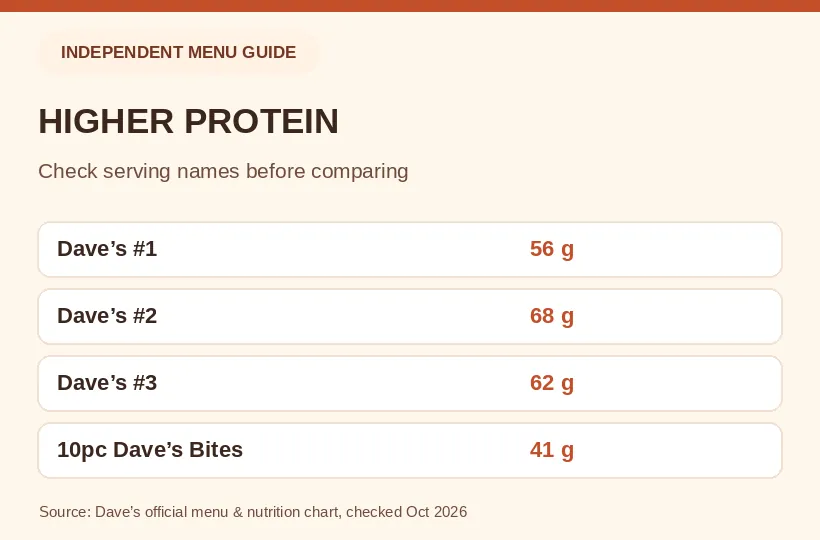
Dave’s official chart lists 56 g protein for #1, 68 g for #2 and 62 g for #3. Ten-piece Dave’s Bites have 41 g, and a Single Tender has 25 g. These servings also differ in calories and sodium.
Which standard combo lists the most protein?
Among Dave’s classic #1 through #4 chicken combos, the official chart lists #2 at 68 grams of protein. That is the two-slider meal with fries. Dave’s #3 has 62 grams, #1 has 56 and #4 has 37. The #2 combo also carries 1,500–1,620 calories depending on the published spice tier. A higher total protein number comes with a larger serving. Choosing #2 when you only wanted one slider could mean buying more food than needed. Compare the full meal rather than sorting the menu by protein alone.
Single Tender and Single Slider protein
The official chart lists 25 grams of protein for the Single Tender without additional sides and 31 grams for the standard Single Slider. The slider’s serving includes a bun and toppings, while the tender format uses bread and sauce differently. Their calories also differ: 490–550 for the tender and 620–680 for the slider. These numbers help compare two practical single orders. A person who wants a sandwich may prefer the slider, while someone who likes dipping chicken might choose the tender. Neither is guaranteed to satisfy every appetite or dietary plan.
| Menu item | Details | Important note |
|---|---|---|
| Dave’s #1 | 56 g protein | 1,230–1,350 cal |
| Dave’s #2 | 68 g protein | 1,500–1,620 cal |
| Dave’s #3 | 62 g protein | 1,370–1,490 cal |
| 10pc Bites | 41 g protein | 650–750 cal |
| Single Tender | 25 g protein | 490–550 cal |
Ten-piece Dave’s Bites are worth comparing
Dave’s 10-piece Bites row lists 41 grams of protein, with 650–750 calories depending on the spice tier. That can be a useful option for someone who likes smaller chicken pieces without a sandwich bun. The with-fries version is a separate product, with a larger calorie total and a slightly different published protein value. Do not treat the ten bite pieces as ten full tenders. Piece counts only make sense when you understand what kind of pieces they are. If you want protein with fries, price and compare the actual product rather than silently adding a random side.
Why protein is not the only nutrient
Dave’s #2 has 68 grams of protein, but the lower spice tier lists 3,340 milligrams of sodium and 75 grams of fat. Those details matter alongside the protein number. A person choosing food for general health may care about several nutrients rather than maximizing one. Dave’s publishes sodium, saturated fat and carbohydrates in its official chart, so there is no reason to ignore them. Nutritional needs differ by age, activity and medical circumstances. A restaurant guide should not recommend a particular high-protein target for everyone. Personalized medical or sports nutrition advice belongs with an appropriate professional.
How cauliflower compares with chicken protein
The Single NOT Chicken Slider lists 8 grams of protein in the official chart compared with 31 grams for a Single Chicken Slider. The NOT Chicken #1 combo lists 10 grams while the standard chicken #1 has 56. That reflects the different main ingredients and complete product assemblies. Someone choosing cauliflower for personal preference or to avoid meat should not be told their food is worse simply because the protein count is lower. They may obtain protein elsewhere in their day. The useful point is that the products are nutritionally different and should not share copied macro figures.
Spice tiers and the reported protein
The chart groups Not Hot and Lite Mild separately from Mild through Reaper. For the main chicken combos, protein figures stay the same across those two rows, even where calories and fat differ. This is more precise than claiming every heat level changes the protein content. A seasoning choice should be based on what you enjoy and can comfortably eat. The restaurant’s Reaper warning should be taken seriously, and extreme spice offers no special protein benefit in the published data. Choose a safe preferred heat setting rather than a challenge designed to increase discomfort.
Does a protein-rich meal need extra sides?
A numbered meal already includes fries. Adding another side, large sauce cup or milkshake changes the complete nutrition and order cost. If you want more food, that might make sense for your hunger, but it should not be described as an automatic protein improvement. A mac side adds a published 14 grams of protein and 290 calories, for example. Some other sides add little protein relative to the calories. Read the exact side and portion in the official document. A practical meal is one that fits your actual appetite without treating every side as mandatory.
Using the data to choose a meal
Decide whether you want a one-piece item, a full combo or a sharing order. Find the exact match in the official food chart and compare protein with calories and sodium. If two options are close, your food preference and cost may be more useful than a small nutrient difference. Check whether the menu at your location includes fries, sauces and heat choices as expected. For a strict dietary or allergy question, consult the allergen chart separately. Protein numbers can inform your decision but cannot guarantee a specific health or training outcome.
Frequently asked questions
Which Dave’s combo has the most protein?
The standard two-slider #2 meal lists 68 grams of protein in the official chart, compared with 56 for #1, 62 for #3 and 37 for #4. The #2 combo also provides more calories than some alternatives. Consider the full serving and your appetite before ordering it for protein alone. The values compare specific complete menu products and do not guarantee that an individual restaurant portion will be identical. If you only want one sandwich, a higher-protein two-slider meal may also give you unwanted extra food. Look at calories and sodium too.
How much protein is in ten Dave’s Bites?
Dave’s 2026 food chart lists 41 grams of protein for the ten-piece Bites product without the fries combo. A with-fries product has its own row and a different full serving. Use the matching product name rather than borrowing a figure from another menu category. A ten-piece Bites order is smaller chicken pieces, not ten full tenders. The official table groups the heat settings into two nutrition rows, so use the published total that matches your product. Extra fries or dipping sauces change the actual meal.
Does a cauliflower slider contain as much protein as chicken?
No. The official chart lists 8 grams of protein for the Single NOT Chicken Slider and 31 for the chicken Single Slider. The foods have different main ingredients. This information can support a menu comparison but does not make either product universally right or wrong for someone’s diet. Food preferences and health needs differ. Someone avoiding meat may choose cauliflower for that reason despite the lower protein total. The right comparison considers the actual serving, other nutrients and the rest of a person’s meals rather than ranking one ingredient as universally better.
Sources and related guides
The Dave’s 2026 food nutrition chart provides reported serving values where available. The official allergen guide explains declared allergens and restaurant cross-contact. For what is sold at a given store, check the official ordering menu. The sources explain standard items but cannot guarantee each custom meal or newly launched product will match a published row.
See our Dave’s Hot Chicken menu and prices, general nutrition guide, allergen guide and Menu Guide. Related articles: daves hot chicken combo calories, daves fries cheese fries calories, daves spicy buffalo mac calories, daves hot mozz calories nutrition, daves cauliflower menu nutrition. Those comparisons work best when you match the exact serving rather than generalize across every menu item.
Final thoughts
Dave’s official chart lists 56 g protein for #1, 68 g for #2 and 62 g for #3. Ten-piece Dave’s Bites have 41 g, and a Single Tender has 25 g. These servings also differ in calories and sodium. Choose the food you will actually enjoy and check the current restaurant menu for availability and customization. If the published data does not cover a specific product, ask Dave’s for clarification rather than trusting a made-up figure. Anyone with a serious food allergy or medically necessary diet should use the official documents and confirm preparation directly with staff.


