How to Check Cross-Contact Risks at Dave’s
The ingredient chart is the first check. How the food is prepared and handed over is the next conversation.
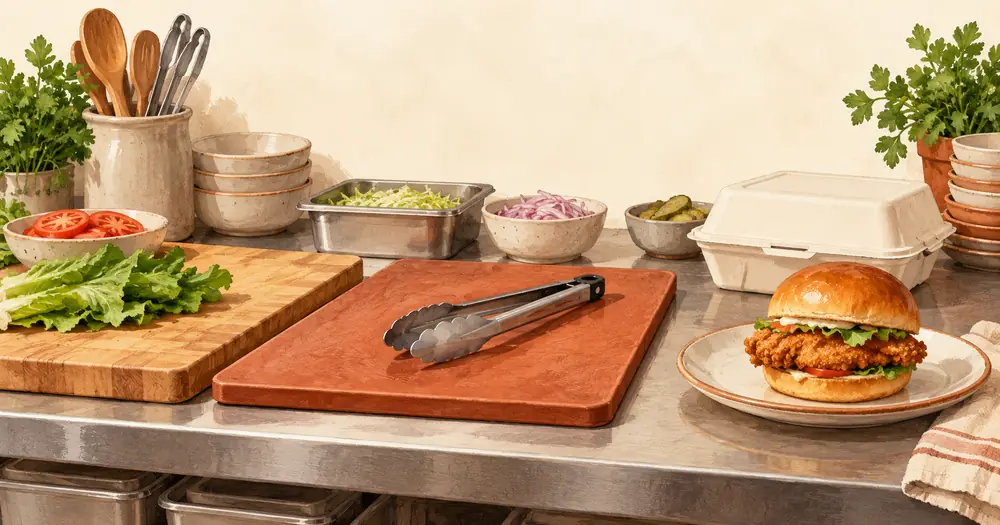
An order without a listed allergen ingredient can still need a preparation check. At Dave’s Hot Chicken, start with the current ingredient information, then ask the selected restaurant about shared equipment and handling. A request such as no cheese or no sauce does not by itself establish an allergy-safe preparation process.
Tell the restaurant which food allergy you have. Ask about the exact dish, the equipment used and how the confirmed order will be identified. If an essential answer is missing, choose another meal or restaurant.
What cross-contact means in practical terms
Cross-contact happens when an allergen is unintentionally transferred to another food. It can involve shared tools, preparation surfaces or equipment. The amount may be too small to see. This differs from simply spotting a piece of cheese or sauce that can be left off during assembly.
FARE’s cross-contact guidance explains that cooking does not make allergen contact harmless. Asking for food to be cooked longer is therefore not a solution to an unresolved allergen question.
Dave’s U.S. allergen chart warns that cross-contact may happen in its restaurant environment. That warning does not describe the exact process at every store. It makes a conversation about your actual order important.
First confirm the recipe can meet your needs
Before discussing separate tools, check whether the food already contains the ingredient you avoid. A clean preparation area cannot remove milk from a coating or egg from a sauce that uses it. You need a suitable recipe and a suitable process.
Read the complete menu item name. A tender with bread and sauce is different from a component described as a breaded tender alone. A loaded fries dish has more components than plain fries. Our allergen chart guide explains how to match those rows.
If a component is unsuitable, ask whether a different product or a genuine assembly change is available. Do not assume that the kitchen can create an unlisted recipe from a request typed into an app.
Questions to ask the manager or preparation team
| Part of the process | Useful question | What the answer should clarify |
|---|---|---|
| Ingredients | Can you check the current product information? | The actual components being used |
| Fryer or cooking equipment | Is it shared with foods containing my allergen? | The route through cooking |
| Tools and work area | Can this be prepared using properly cleaned tools and surfaces? | How assembly will be handled |
| Added toppings | How are sauces and toppings kept separate? | Handling after cooking |
| Handoff | How will my confirmed order be labeled and identified? | Which package belongs to the guest |
These are questions to ask. They are not claims that Dave’s provides a dedicated fryer, separate station or allergy-specific service at every location. The person responsible for the order needs to explain what that restaurant can actually do.
A short example of a clearer conversation
Instead of saying only “Can I get this without sauce?”, try: “I have a milk allergy. Can you check whether this item’s ingredients fit that requirement, and explain whether the fryer and preparation equipment are shared with milk-containing foods?”
If staff confirm a possible order, repeat the exact product and agreed changes. Ask who will communicate the request to the preparation team. This helps distinguish a topping preference from an allergy requirement without relying on a vague note.
FARE’s restaurant guidance recommends planning ahead and discussing both ingredients and preparation. A manager who needs time to check a label is providing a different answer from someone making an immediate guess.
Why one change does not answer the whole process
Changing gloves addresses one part of handling. It does not tell you what touched a utensil, whether oil is shared or where the food will be assembled. Ask about the process from cooking through packaging rather than stopping at the first reassuring detail.
Likewise, a sealed sauce cup can simplify identifying a condiment, but the rest of the meal still needs its own check. A separately packed side might still have been prepared using shared equipment. Packaging and preparation are related questions, not interchangeable ones.
For ingredient-specific checks, see our milk-avoidance guide and soy-allergen guide. They help narrow the ingredient question before you discuss the kitchen process.
Pickup and delivery need a clear handoff
Resolve important questions with the restaurant before placing an online order. A delivery driver generally is not the person who can confirm the recipe or preparation process. Use the store’s contact route when you need those answers.
At pickup, identify the order and confirm the agreed changes. If a different item has been substituted or a package cannot be identified, ask staff to resolve it before the food is eaten. Do not assume that removing an unexpected topping from finished food restores the preparation you requested.
The online ordering guide explains the normal checkout and confirmation steps. An allergy conversation needs to happen alongside those steps when it affects whether you can place the order.
Keep the plan clear when eating with a group
Allow the person with the allergy to review the information and choose their own meal. A well-meant substitute can create more uncertainty if nobody checked its ingredients. Sharing a Hot Box also makes individual pieces and serving tools harder to track.
Keep a confirmed separate meal identified during transport and serving. Do not use the same dipping cup or serving utensil across several dishes when allergen contact is a concern. Agree on those practical details before everyone starts unpacking.
Know when to stop the order
If staff cannot confirm ingredients or explain a required preparation step, another food choice is reasonable. A busy kitchen, unfamiliar product or missing label can leave an important question unresolved. Convenience does not turn that uncertainty into confirmation.
Follow the allergy management and emergency plan provided by your clinician. Do not use an ingredient chart or a small taste to test whether an uncertain food is safe for you. For the menu itself, browse the Dave’s Hot Chicken menu. For an allergy order, the final decision needs both ingredient facts and clear preparation answers.